


How a Computerized UTM Improves Accuracy and Efficiency in Your Testing Lab

In today’s competitive manufacturing environment, precision and speed are everything. Whether you’re working in material testing, quality control, research, or product development, the reliability of your testing equipment matters. That’s why more labs are upgrading to a Computerized Universal Testing Machine (Computerized UTM) to boost accuracy, efficiency, and overall testing productivity.
A computerized UTM combines mechanical strength testing with advanced software, enabling better data precision, faster workflows, and automated reporting—key factors that directly improve your lab’s performance.
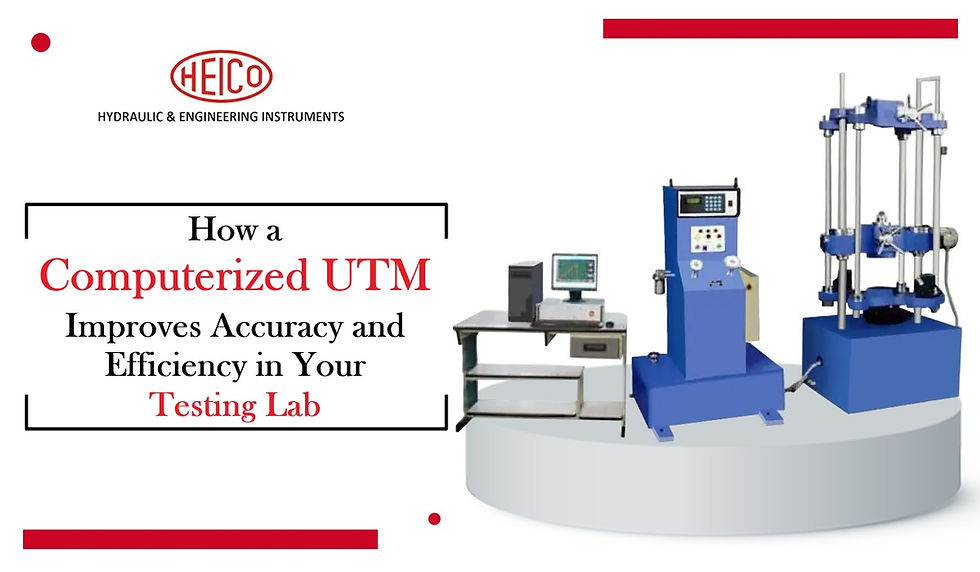
What Is a Computerized Universal Testing Machine?
A Computerized UTM is an upgraded version of a traditional Universal Testing Machine equipped with:
Digital load sensors
High-resolution extensometers
PC-based control software
Automated data acquisition
Real-time graphical analysis
These machines are widely used for tensile tests, compression tests, flexural tests, and shear tests on metals, plastics, rubber, textiles, composites, and construction materials.
Key Benefits of a Computerized UTM in Modern Testing Labs
1. Superior Testing Accuracy
One of the biggest advantages of a computerized universal testing machine is its unmatched accuracy. Modern UTMs use digital load cells and automated calibration, delivering:
Precise load application
High sampling rates
Reduced human influence
Repeatable, reliable results
High-volume keywords used: “accurate material testing,” “precise tensile testing,” “high accuracy UTM”
2. Real-Time Data Acquisition & Analytics
Computerized testing systems capture data in real time, allowing labs to:
Visualize stress-strain curves instantly
Track peak load, yield point, elongation, and break points
Customize test parameters
Prevent data loss
This makes it easier for engineers and quality teams to make fast, informed decisions.
3. Increased Testing Speed & Efficiency
A computerized UTM dramatically improves operational efficiency by:
Minimizing manual intervention
Reducing time spent on setting up tests
Automatically recording and saving results
Enabling multiple test sequences
Labs can easily test more samples per day, leading to higher productivity and faster project turnaround times.
4. Automated Reporting for Faster Documentation
Manual report preparation often leads to errors and lost time. With a computerized UTM:
Reports are auto-generated
Formats comply with international standards (ASTM, ISO, BIS)
Custom PDF or Excel reports can be created
Data can be exported for audit trails
This automation helps labs maintain flawless documentation and consistency.
5. Enhanced User Experience with Intuitive Software
The built-in UTM software is designed for ease of use:
Touchscreen or PC-based control
Graphical user interface (GUI)
Customizable test programs
Operator-friendly workflows
Even new technicians can operate the system with minimal training.
6. Better Compliance with Global Testing Standards
A major advantage of computerized UTMs is their built-in compliance with major standards such as:
ASTM D638, ASTM A370
ISO 527, ISO 6892
BIS Standards for construction materials
This ensures globally accepted results—critical for export industries and certification labs.
7. Reduced Human Error & Improved Repeatability
Manual testing often results in inconsistent results due to:
Variations in load application
Timing inconsistencies
Human reading errors
A computerized universal testing machine eliminates these variables through automation and stable digital control.


Comments